

The body. I've been thinking a lot about the body lately, and more specifically the sensory experience of the body, and today I would like to muse around in what ways this bodily intelligence is related to artificial intelligence.
My struggle with a phobia of instant messengers
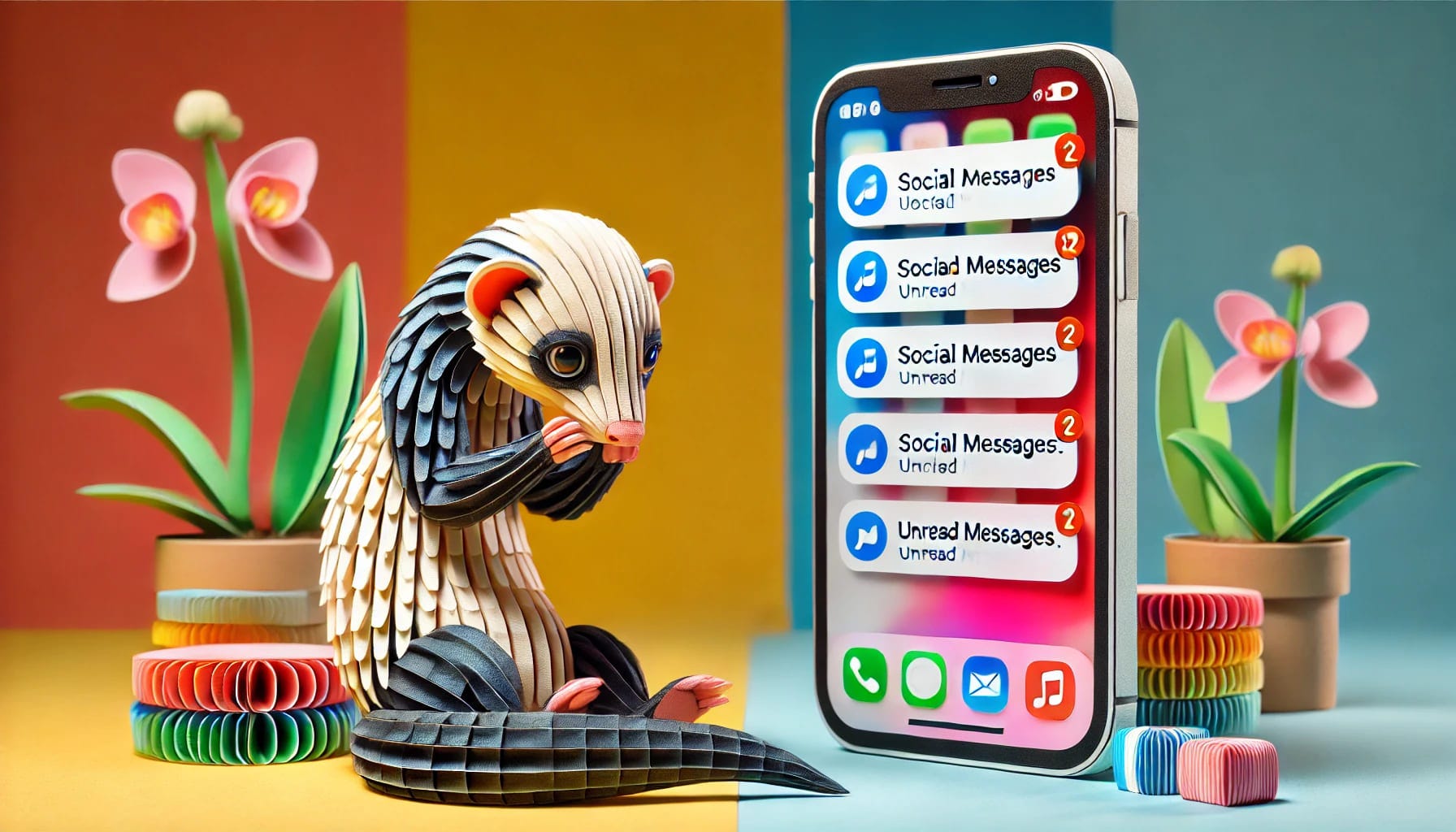
For almost two years now, I've been struggling with a weird niche of social phobia - I don't avoid social interactions, but digital social interactions create a strong aversion in me. I often have to resort to massive amounts of self-discipline, or even trickery, just to open a messenger and coordinate meeting someone.
I used to love messengers of all forms, and was an enormous cheerleader when Slack finally replaced IRC during my time at Spotify, so this is quite a weird change for me, and to some degree a sorrow.
I enjoy the interaction itself and I enjoy having it booked. But the very process of coordinating meetings creates a physical revulsion in me that is debilitatingly strong. To some degree, I dislike the phone in general, but doing it on the computer creates a similar aversion, so I think it's orthogonal to my general phone aversion.
The sensation manifests as a symmetrical experience on the sides of my body, located a bit under my armpits. I struggle to find a label for this sensation - perhaps weariness? It's overwhelming, hinting to me that the task is herculean and that I'm not resourced to do it.
I didn't always have this; it somehow crept up on me gradually during the pandemic. It's localized around messages and doesn't seem as strong around email. It's mysterious.
Neural Networks: Biological vs Artificial
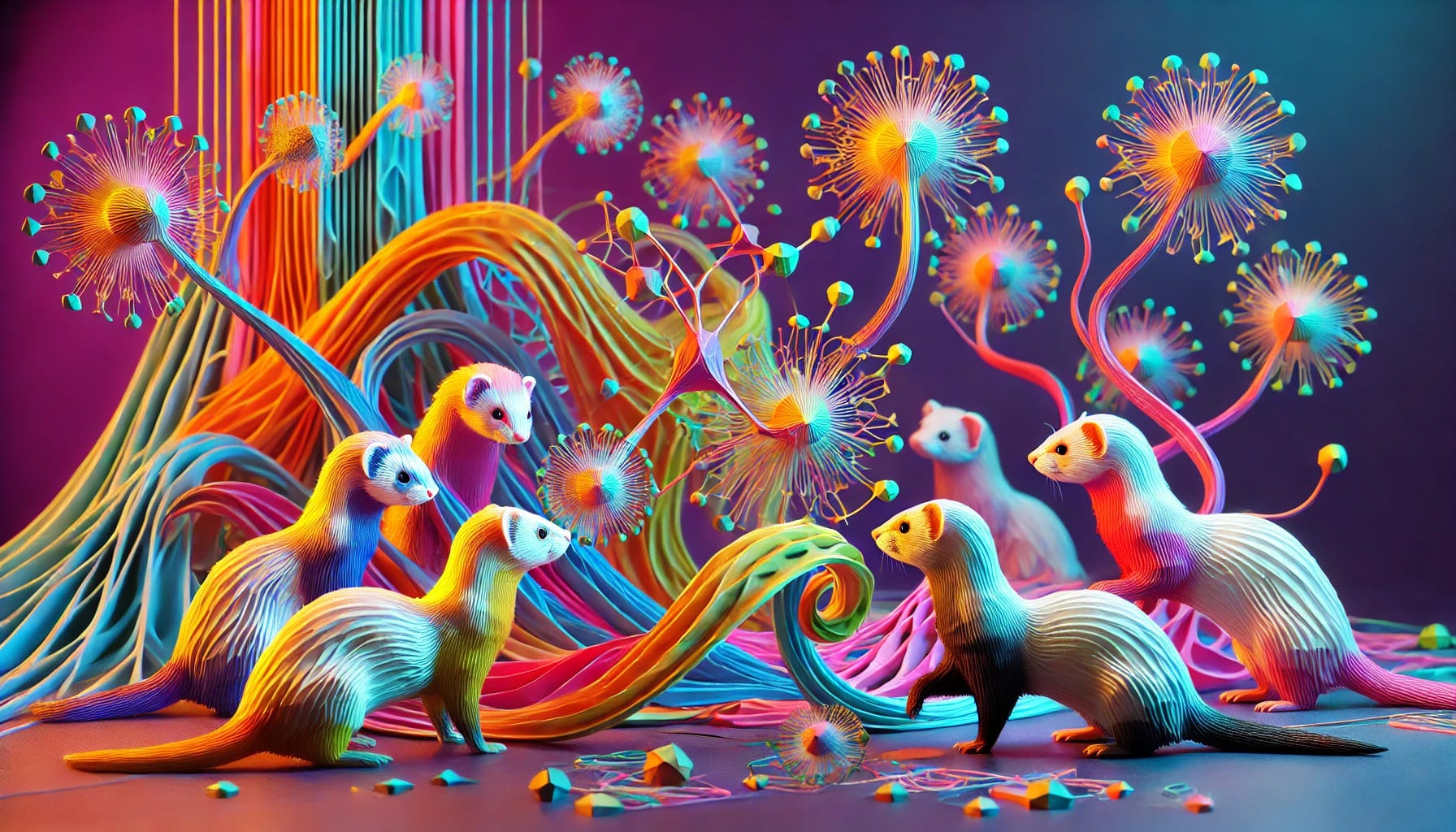
This particular neural network in my body (or perhaps my neurology is a better term) seems to have developed to protect me from something in the past, and I have rewarded it in some ways that made it stick around. But like artificial neural networks, we don't really know exactly why this is happening.
When we inspect artificial neural nets, their digital structure is just a huge pile of numbers. When we inspect our actual biological neural nets in our bodies, we just experience the sensations I described above.
Vipassana Meditation is specialized on this sensory phenomena, and has a word for it: Sankaras - often translated as "mental formations" or "conditioned responses," are deeply ingrained patterns of reaction that we've developed over time.
I personally describe them to others as the experience of a strong sensation in the body, often clearly localized, that triggers and automated craving or aversion in behavior. In Vipassana, you work with these Sankaras by sitting with them in equanimity, sometimes in Adhittana - strong determination sittings. In these, you sit absolutely still for an extended period of time, and intentionally do nothing in response to the Sankaras you feel in the body, which eventually causes them to lose their hold over you.
In practice, this means that the little twitch that makes you reach for a cigarette, when not responded to, will throw an enourmous tantrum in your body and sometimes grow to near unbearable pain during the session. It is very challenging process, but is often very effective at dealing with these little beasts.
When is an explanation more than just a story that sounds good?
I overheard in an episode of "Hard Fork" that one idea floated to halt AI development to a sensible pace was to require an explanation as to why a certain response was given. The problem with this notion is that most explanations about behavior are after-the-fact constructions of narrative. They often stick because they sound plausible and because there's no way to prove that the explanation is false.
For example, if an AI recommends an article to you expressing a certain political view, and you ask it why, it provides an explanation. I can logically guarantee you that there will be no realistic way for you to disprove that explanation, because neural intelligence is not explainable to that degree of granularity.
Don't get me wrong - we can certainly try, but explanations will lean more towards "Demeter causes the seasons because of Hades kidnapping Persephone" rather than "the Earth's axis is tilted at approximately 23.5 degrees relative to its orbital plane" i.e., verifiable, but not falsifiable.

In the context of Vipassana, they take the stance that understanding where a Sankara comes from is simply not all that important. If you are washing clothes, do you really need to understand where they stains come from? Just wash the clothes.
This makes sense when a Sankara is highly inappropriate and we just need to stop with it - we don't really NEED to understand why we started smoking, for instance. However, in some cases there is a legitimate reason to make sense of, label and narrate a sensation.
Autism Spectrum and Sensory Processing

I've lately been introduced to quite a bit about the autism spectrum. In particular, a friend of mine told me the story of the struggles of raising a child on the spectrum. His plight was quite severe - he was so overwhelmed with his sensory input that it made him intermittently suicidal, creating enormous pressure on the family.
This touched me quite a bit because he was also a child that was a misfit due to high intelligence. In tests of cognition, he constantly performed six years above his age level.
Recently, he's finally started receiving effective treatment. That involved teaching techniques of identifying sensation sets in the body as feelings, such as anger, etc. When they are identified as discrete concepts, one can reason and deal with them. Essentially, when we know what a sensation is, we can relate to and deal with it. Negotiation can happen with our being, and needs can be verbalized to others. Prior to this, all we can do is scream.
Learning to Identify and Process Emotions
My experience with my lovely instant messaging phobia has made me realize that I don't really know how to do what my friend's son is currently doing. During my upbringing, I was taught several stories about sensations. Some adult at some point asked me to inspect my sensations as anger or sadness, and then I learned those stories.
However, these feelings are rather primitive stories. We are much more sophisticated than "angry" or sad" - which is why we have words like "iktsuarpok” (an Inuit word for the specific anticipation felt when waiting for someone to arrive).
As stories go, they are kind of "save the kingdom from the dragon" in complexity. In reality, our intuitive neurology can handle much more complex patterns, as anyone who has struggled with addiction can attest to.
The Ninja Luxury

This week's sponsor is Console Ninja which is the recent developer experience luxury item developed by the lovely Australians at Wallaby.
I discovered Wallaby.js back in 2016 because of my love for unit testing, and I've used Wallaby religiously since. I.e. way before they became a sponsor - it's one of the few plugins I use, and I can't remember another plugin I've ever paid money (both for myself and my teams).
Console Ninja is the latest product by Wallaby, and it is quite an impressive beast. It integrates with hot-reloading build tools like Vite (and tons of others) and slurps errors from the browser into your dev environment, so that you get runtime console.logs and console.errors next to the relevant line of code inline in your editor. 🙀🥰🥳
It cannot be overstated how beneficial shortening the feedback loop and reducing the number unnecessary alt-tabbing to the browser during development is. The reason I've used Wallaby.js and Quokka so much through the years is I can spend more time in my editor and less time in the browser, which really helps me stay more of my time in flow state.
You're worth it.
Wallaby.js, Quokka and Console Ninja are the kind of tool that you don't strictly need, but you still kinda do - they just make development work faster, more flowy and more delightful and it adds up SO MUCH in the end. Give yourself this gift.
💛 So if you want give yourself a some extra luxurious support this week, and support Fun Fun Function at the same time, use our referral link, it helps a lot: fff.dev/console-ninja
Now, back to the show!

Are intuitions actually little complex adaptive systems?
Becoming nicotine-free is a tremendously interesting experience that teaches you how wily your automatic neurology can be. Suddenly, you just find yourself with a cigarette in hand without any conscious action - discovering that your being has completed a couple of logistical, financial, social and maneuvers all with significant amount of motor control, all under your nose.
How does one test that a story about an intuition is true, or at least test if it is false? When I was dating the last time around, I followed a very interesting dating coach who once answered the question "Why do I always fall in love with the wrong man?" with "This is your fault for not dealing with your attachment patterns." This made me realize that my entire life, I've been using "falling in love" or "loving" as a kind of catch-all emotion for all kinds of weird experiences.

This led me to learn quite a bit of Greek words because Greek has a lot of specificity that English and Swedish lack, especially around love.
Eros is passionate, romantic love, full of intensity and desire. In contrast, Philia captures the deep connection shared between friends. Storge speaks to the natural affection within families, such as the bond between parents and children. Agape, however, transcends all others as selfless, unconditional love, extending even to strangers. Philautia focuses inward, representing self-love, which can be either healthy or excessive. Ludus brings a playful, flirtatious energy, while Pragma represents love that has matured and deepened over time.
Learning these distinctions helped me realize that when I thought I was "falling in love," I might actually be experiencing philautia, ludus, or even just a strong sense of philia. It allowed me to be more precise in understanding and communicating my emotions.
Sidenote - Greek has different words for time that capture nuances we often miss in English:
Chronos: This is chronological time, the kind we measure with clocks and calendars.
Kairos: This is the right or opportune moment. It's qualitative rather than quantitative.
What is your aphantasia apple number?

On an unrelated note, I was asked with week what my Aphantasia Apple number is (I’m a 4). Even though I am aware since before, of aphantasia as a concept, I did not know there was a classification scale until this week. My partner was the one that introduced me to aphantasia - she is a strict 5 that never goes down and has all kind of wonky alternative ways of "visualizing" streets and whatnot.
I hope you are content with your own Apple number this week, and that your inner world serves you well.
Stay Curious.