


Good Monday Morning to you, and all your fellow kits
I had a bit of a vacation this week, visiting some friends, hanging around in a country house.
To paint the scene: it was the kind of mellow environment of Swedish summer that you might imagine, where people hang around talking to each other, some sitting around reading, etc. I really love that state to be in.
Anyway, I was called over to the kitchen, because quote "My superpowers were needed". The matter at hand was that someone in the kitchen had expressed that she was obsessing over a persistent thought that she was struggling with letting go, and I am very good at helping people to stop ruminating.
This has become more and more of a party trick these days, and I figured that for this week, it would be cool to make an attempt at doing a short writeup on how I get thoughts under control.
I'm going to convey the practical aspects as much as possible here, and not get caught up TOO much in the theory of it.
You're buying me coffee 💛🙏

After my ask last week, I wanted to make a followup and express a lot of gratitude to the very special funfun.email subscribers Endzeit__, Evgenii, Alex, Carl, Miguel Martínez, Thorben, Dennis, b4lthazar, Pontus, Kiyota, Tim, Tre, duncanadam, Kevin, Viktor, Kiffin Gish, laura, aga, Casper Kuijjer, madmanden, Jur, ganonbit, Karo, adrianbravom, howmanycatscanyoufitintoabasket, isacvale, Olha Vadiasova, maxeozakh, Joséphine, Kaninjaevel, davidvasquez, Joe, istvan_design, jaredplowman for Buying Me A Coffee.
Thank you so much for your trust and financial support in these early days, but also your lovely comments, comments like this one makes my day and gives a big boost of energy.
Taming my brain
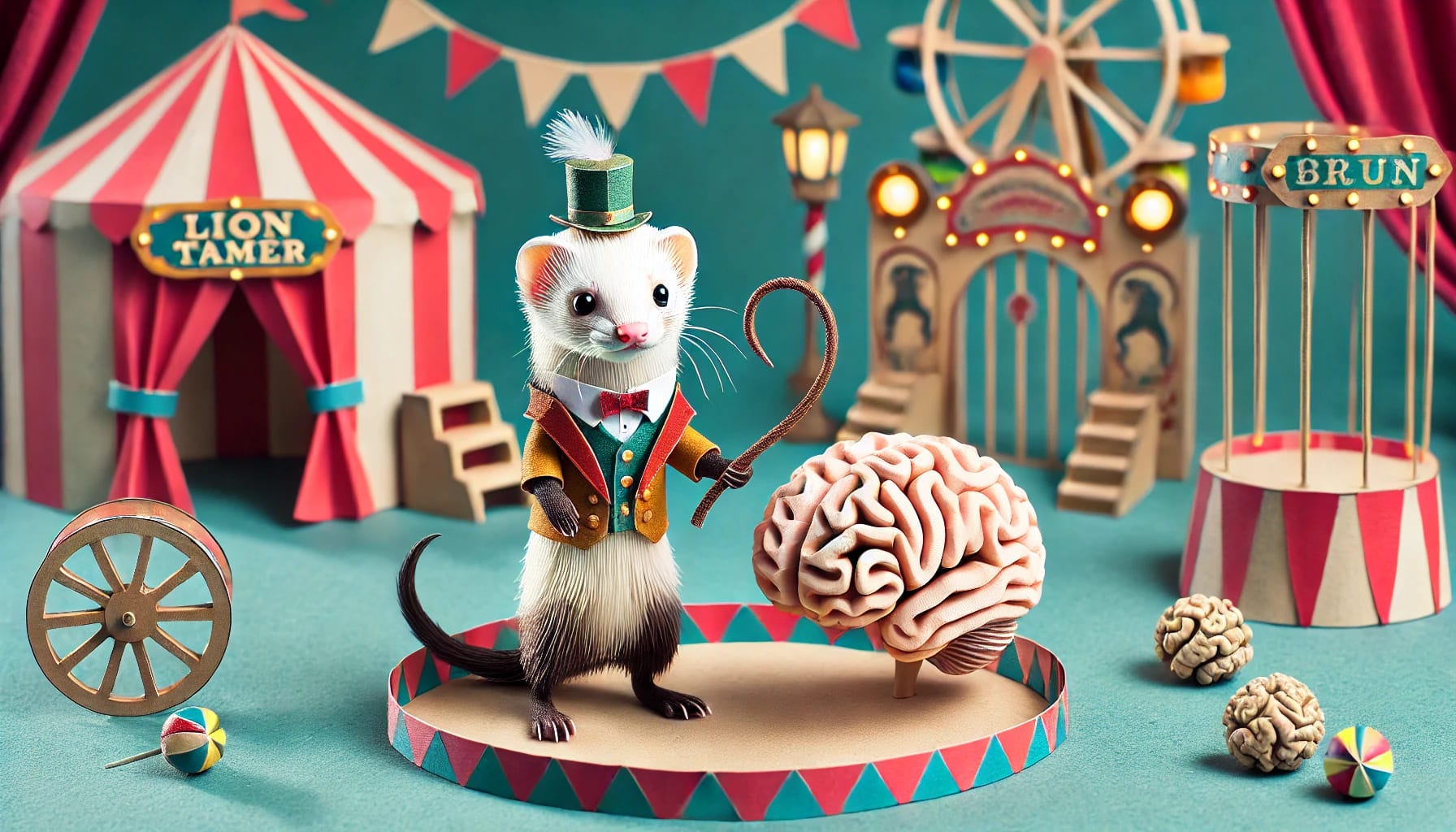
When it comes to dealing with my own brain, I think of myself a bit like a lion-tamer, and even though it seems like some people are blessed with more well-behaved brains than yours truly, much of the more universal tricks that I have learned over the years seems to be highly appreciated by less neurospicy brains too.
I have lived my entire life with a VERY active and persistent brain, and some thoughts for me can be very, very VERY 'sticky'. It's like the thought shows up one day and says "Hey, I am going to live on your sofa now for a couple of days," sometimes weeks, sometimes years.
Many times I am grateful for this trait, some things are just very fun to think about, and the whole mechanic is at the core of my writing skill, it is where my writing comes from, in a sense.
But it can also be extremely problematic when the brain gets stuck on a problem that cannot be solved - during times in my life it has been very debilitating and created a call-depth-exceeded problem. In some cases it's just been sleep lost over interesting ideas, but in some cases it has taken me to very dark places turning a tiny event into a potential calamity.
Out of pure necessity it has required me to develop somewhat of an expertise in developing various obsessive-thought-busting techniques, and over the years I've become a fascinated student of the topic of thinking-that-you-cannot stop, and my models and techniques for dealing with this are constantly evolving.
Ignore thoughts and emotions, shift attention to underlying sensations

What I advised this person to do in this particular moment was to first identify that they are thinking in the first place:
"I am thinking a thought".
I did not inquire about what the thought was, as the specifics of the thought are generally not relevant to the mechanic of obsessive thoughts, and an external person going into the thought just validates the addiction to the thought, satiating it temporarily, but it will come back in force later.
I am of the strong opinion that challenging obsessive thoughts can be very dangerous and addictive. Thinking should be self-critical and bouncing concepts back and forth, but if one notices that a thought is re-occurring and seems patternistic, it should NOT be reasoned with, not by yourself or an external party, that just strengthens the thought.
Instead, I have found that a much more effective technique to deal with this is to, after we have observed that the thought is happening, draw our attention to the sensations in your body that seem to be correlated with that thought (or emotion), to see what bodily sensations are triggering the thought (or emotion) in question.
Distinguishing sensations and emotions
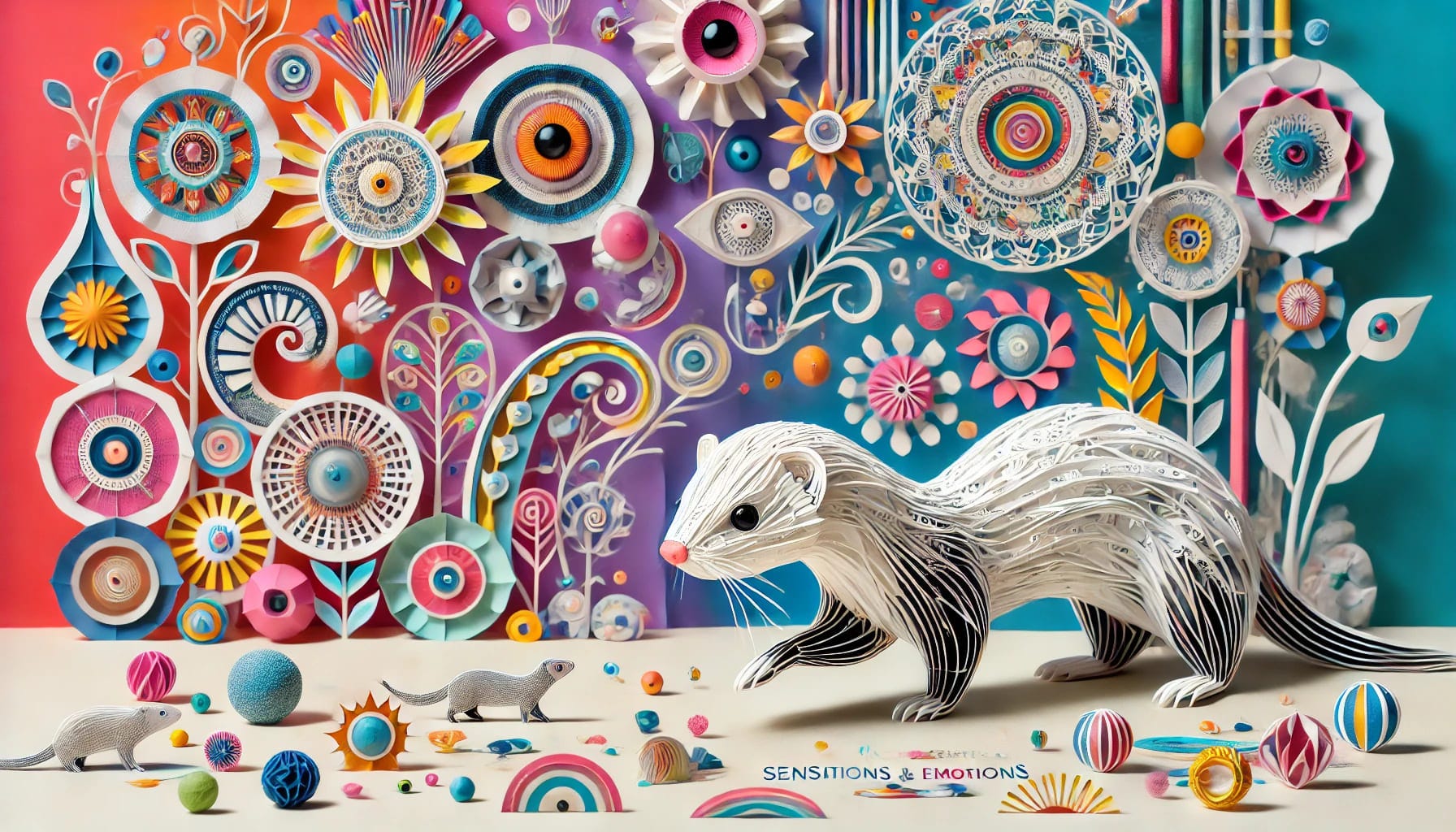
What I mean by 'sensations' is the group of experiences that includes the tingly stuff that you can sometimes sense on your skin in a calm state.
It's very important to understand here that it is SENSATIONS we are targeting, not EMOTIONS. Emotions are abstractions that we construct on top of sensation as we grow up - we learn from our parents that an experience in the body is 'anger' etc. and to a large degree we learn more basic emotions as well, being sleepy, hungry etc.
It seems to me that most animals have sensations and emotions. On top of sensations and emotions we add a third abstraction, thoughts, allowing us to construct massively complicated patterns of action and reasoning.
However, it is very important to understand that sensations are the lower layer of all of this. Your sensory experience is what everything starts with. It is the raw data stream. The event source, from which we aggregate into learning, in the shape of emotions and reactive patterns, and stories, to label and sensemake these patterns.
The messy dance of signals

These stories and descriptors can then roll around in our heads and also roll out of our heads into the heads of others through the protocol of language (in fact, it is due to the protocol of language that they could get into our heads in the first place). The whole matter of stories and thought and self is an interesting matter in general, but we don't really care about that right now, what I want to highlight here is that there is a story rolling around in your head. I use the term 'story' liberally here to refer to a 'thought with characters in it' - and you are probably the main character.
Stories can definitely be "experienced" which means that this all becomes a very bouncy experience with side-effects galore. If you've ever read the philosopher Douglas Hofstadter's book I Am A Strange Loop (Amazon), where he famously describes a theoretical self-referential domino computer with logic gates, which made me think of an Angular app with sufficient amount of legacy code - this is what the book alludes to, that the I equals a strange looping construct.
But you don't need to go off reading Hofstadter, and in fact you shouldn't because that is actually a meta-thinking trap that you should stay the hell away from. If you, like me, are a fan of Alan Watts (Wikipedia), you should take into account Alan Watts did die of alcoholism. Reasoning about these things is fun, but it is ultimately useless unless we are practical on a sensory level - there is a difference between being a soccer fan, soccer expert, soccer professional and a soccer player. In the end our explorations into this needs to be judged against if it makes us function better and lead better lives.
All that is relevant to know here - in the context of stopping ruminating thoughts - is that stories can trigger sensations, that trigger emotions, that trigger thoughts, that can trigger emotions which can trigger sensations. It's all a very messy dance of signals.
So how can we handle a messy system?
What parts of our freedom can we actually "will"?**

Disclaimer: I don't think the free will or no free will debate is particularly useful in general, but I think some parts of our behavior are much more after-construction than others and understanding which ones are is very useful.
What I've found is that we have relatively little conscious control over all of this chain, it bounces around like organisms do in nature, and it mostly works out. A lot of things JUST seem like I do them actively, but in fact it only feels that way because I am experiencing the story that I am telling myself after the fact.
I.e. "I am eating this pizza because I was hungry" is a narrative that is a post-event conceptualization, a retroactive sensemaking of a chain of events. This gives the illusion that we are eating because we experience hunger, an emotion, when in fact, this is all mostly automatic reactions and us going "ah yeah I totally meant to do that" in our head after the fact.
Loop-breaker: Extinguish the repeating pattern at the sensory level

But when we become aware of a destructive loop, we can stop it by turning our attention to the sensory experience, finding the lowest level of experience that we have access to, and just keeping our attention tracked on it.
This can be very tricky to do for very intense sensations, and your attention will try to draw away to making up stories around the sensation, or try to get you to do some other reaction.
It usually does this because it has somewhere along the line learned that this gives some effect that is somehow parsed as good for survival, so it is at its core a friendly system that only does things that are rewarding for you. These mechanics can sometimes be very obscured - for example, I myself had an extremely long period where I constantly brought up seemingly random things my ex did, which had extraordinarily random patterns, and it took me quite a while to understand that I was using it as a kind of caffeine to make myself furious in order to get through the day when I was tired. A destructive pattern sure, but my system was doing it because it WORKED.
However, when you sit down and observe your raw sensory input, in a neutral state, without responding to the input, the loop eventually gives way.
For small obsessions just giving some attention and neutrality can make it evaporate, but some sticky buggers in your system require more practice and concerted efforts.
Over the years I've gotten pretty advanced in this, and my skills in this really took off after I bit the bullet and started going on yearly Vipassana retreats, and I really cannot recommend these enough if you are struggling with a noisy mind.
Vipassana: Technique

Vipassana is known for the fact that the beginners course is a 10-day silent immersion retreat, with no phone, notepads, talking etc. All food is provided to you, schedule set, etc. You can completely focus on the work of sitting with your sensations.
Vipassana is a much simpler meditation technique than most - it is one where you practice (A LOT) sitting with reactive patterns of craving and aversion (sankaras) in perfect stillness and equanimity.
Vipassana is about avoiding triggering chains of craving, so talking in terms of 'success' is a bit tricky, but if there is any success metric and core skill, it is practicing this equanimity - an experience that one would narrate as it is happening "I am perfectly okay with this sensation".
I like Vipassana a lot because there isn't much to understand or explain, it's more about cultivating a discipline to practice a skill - if it was a cooking school, all you would be doing would be to practice chopping with your chef's knife, it is all just pure practice of one specific thing, during all your waking hours, for 10 days, with all possible distractions removed.
Vipassana: Format

As a course format, Vipassana is interesting in itself - how ridiculously much work one can get done in 10 days when there are no interruptions and one is supported with basic needs. It is an inspirational example of efficiency and effectiveness in a way, and shows how incredibly wasteful a world of constant interruption is.
There are shorter courses than 10 days, but they are only for students that have already done the 10 day one. 10 days sounds like a lot for meditation, but let me tell you that you really need that time in order to land in it the first time, it only clicked around day 6 for me personally even though you are essentially doing the same thing over and over.
It is also very inspirational that it is a non-profit, non-religious, non-sectarian organization completely served and operated by former student volunteers (some full-time) and is completely free including food and lodging. (Donations are optional, and can be done after the course if you have the means at the time).
Vipassana is widely available with centers all across the world, and bookable online: https://www.dhamma.org/
Paraprosdokians & crash blossoms

On a completely different note, funfun.email subscriber Björn made me aware of the wonderful term "crash blossoms, and I wanted to share it with you all:
If you like paraprosdokians, you'll likely love "crash blossoms". These usually come from headlines, and can do weird things to your brain. Here's the example that started it all:
Violinist linked to JAL crash blossoms
Context: JAL = Japan Airlines. Read that a few times and see if you can make sense of it.
If it's hard to figure out, the story is about a young violinist whose father died in a JAL plane crash, and her career has prospered since the crash.
Plenty more here: https://languagelog.ldc.upenn.edu/nll/?cat=118 Some hilarious, others simply baffling. (Radiation Risk from Flying Dwarfs Body Scanners is a favourite)
Enjoy the rabbit hole!
Regards, Björn
Hannah and all, please do not hesitate to hit that reply button - it goes directly to me! I can't reply to all of you, but I do respond to quite a bit, and I always love reading your replies.
☕️ Do consider buying me a coffee if you enjoyed this one, but no pressure!
Keep on being curious